

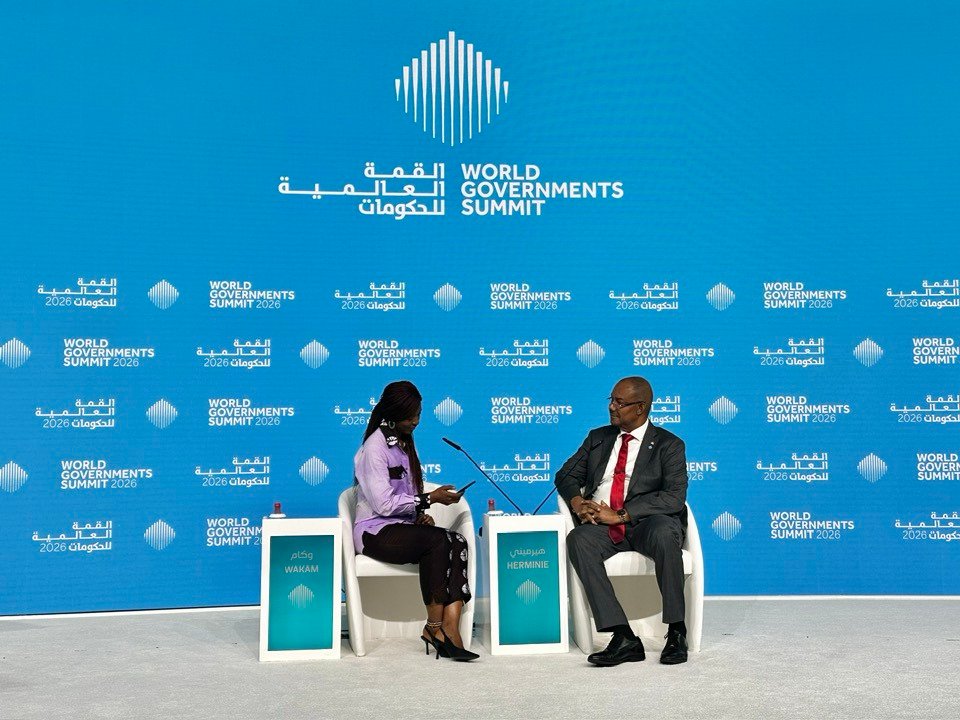
The President of the Republic, Dr. Patrick Herminie, participated in a one-to-one interview entitled “A Conversation with the President of Seychelles on Health and Wellbeing” on the margins of the World Government Summit.
During the interview, the President shared his perspectives on how technological advancements are enabling healthier lifestyles, strengthening preventive care, and supporting more personalised approaches to wellbeing.
Within the context of the Republic of Seychelles, the discussion focused on how health and wellbeing are central to shaping inclusive, liveable communities, particularly in island and coastal settings. The conversation explored how integrated, technology-enabled approaches can link health, environmental stewardship, and planning to improve quality of life, while advancing sustainable development, social cohesion, and long-term wellbeing for present and future generations.
Here are segments from his conversation with the moderator
How do you reflect on the past few months of your presidency?
We were given a clear mandate by the people of Seychelles to put our core principles into practice. The past hundred days have been hectic, as we set specific targets to achieve within this period, and I am proud to say that we have accomplished nearly 90% of them. Leading a country is not easy, public affairs can be very challenging, and in a small country like Seychelles, leadership is very close to the people. That is why we established a Department of Public Affairs to address these matters.
At the World Government Summit, what one piece of advice would you offer leaders on prioritising the health of their nations?
Public health and prevention are key priorities. Unfortunately, too many people are dying from preventable diseases. If we invest in infrastructure such as proper sanitation and housing, we will achieve better outcomes. Technology plays an important role, but it often benefits only a few; for the vast majority, we need systems in place that enable people to live healthy lifestyles.
How can health and wellbeing be embedded into urban planning to enhance quality of life in island and coastal communities such as Seychelles?
Health and well-being are essential for the human race. It begins with proper housing a safe home contributes to family stability, mental health, and a positive environment for education. Housing is not only a social issue in our country; it is also a public health issue. For this reason, the Government has embarked on a progressive programme to build nearly 2,000 houses over the next two to five years.
Other key issues include transport. We want to make it affordable and accessible, and just yesterday we reduced bus fares by two rupees. After the Summit, I will be on an official state visit to India, where we intend to introduce electric buses powered by renewable energy, which are healthier and more sustainable.
Of course, sustainable development remains a priority. In Seychelles, there cannot be large-scale urban development due to our small size, so we conduct Environmental Impact Assessments, which are very stringent. This is why we often highlight that the Minister responsible for the environment is among the most influential roles in the country. We insist on strong EIAs to preserve our ecosystem and our way of life.
What role do preventive health measures, lifestyle design, and community-based wellbeing play in building resilient and liveable urban futures?
Prevention is better than cure, and there is a need for a paradigm shift. As a public health doctor, I strongly believe in prevention. When we look at the world and even at my own country the current burden of disease is largely driven by non-communicable diseases such as cardiovascular conditions, diabetes, and cancer. These are largely preventable, and with proper lifestyles, good nutrition, and education, we can significantly reduce their impact. This is where we must place greater emphasis on prevention to ensure a healthier nation.
While medical technology today is very advanced, it often benefits only a few. For the vast majority of people, strengthening prevention remains the most effective and sustainable approach.
How can technology and data support healthier cities without compromising inclusivity, accessibility, or the human-centred nature of urban life?
We live in an age of advanced technology, and I believe all decision-making should be data-driven and evidence-based. This approach helps us formulate policies based on facts, adjust them when necessary, and measure the outcomes of our interventions. Technology is an enabler that makes processes faster and more efficient. For me, this represents the future of health strong data analysis combined with the effective use of technology.